
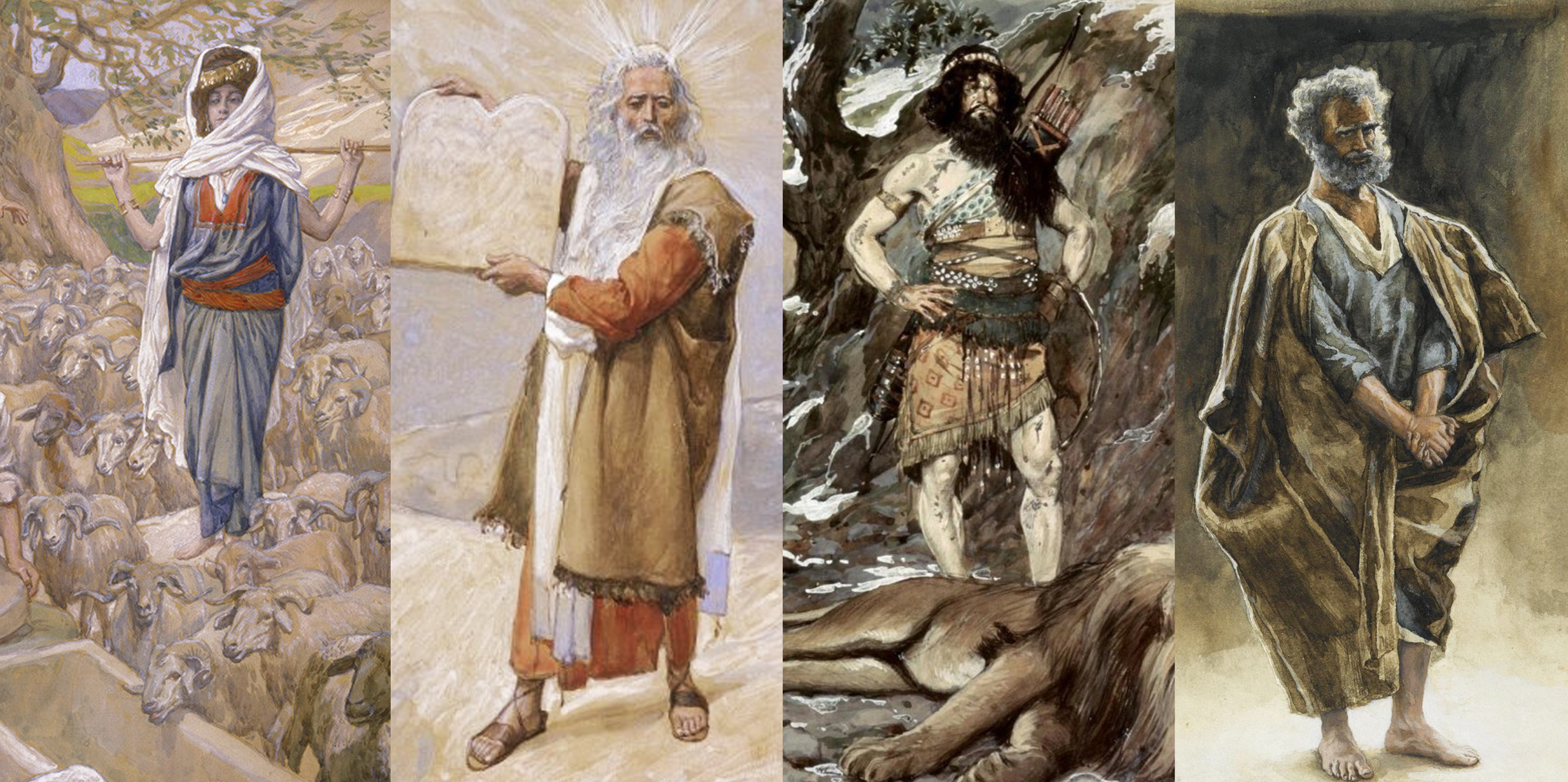
Greetings, my Redemption friends! I am thrilled to share with you the project I have been working on for the past few months. This is the Paragon Format, a new casual way to play Redemption with any player count from 2 to 5. It is designed to be both a fresh deck-building experience for veterans and an approachable way to introduce a group to the game. Enjoy!
The Origin Story
I first considered the possibilities of a new format after Nationals this year. This was the first National tournament I had attended in 14 years, so it really got me thinking about the state of the game.
In my mind, Redemption was in need of two new formats:
- A multiplayer format that works without all the problems of traditional multiplayer
- A casual format that is more approachable for new players
I wondered if it was possible to create one format that could satisfy both of these needs. Two birds, one stone.
For inspiration, I looked at what some other CCGs do for casual multiplayer formats. The obvious big one is Magic's Commander format. Another similar one is Star Wars Unlimited's Twin Suns format. Both of these formats transform their respective games in two ways:
- Minor changes to gameplay rules, to accommodate additional players
- Significant changes to deck-building rules, having decks built around a main character
Redemption is a very different game than either of those examples, so I knew the end result would be unique. However, the basic elements were a good place to start. I brainstormed the gameplay changes that would be necessary to make Redemption work well with more than 2 players, and I imagined possibilities for what a main character could be like in Redemption.
One of the first challenges was deciding what to call these main characters. I couldn't actually call them "Main Character" because they are not technically Characters by Redemption's definition. They could be called "Commander" like in Magic, or "Leader" like in Star Wars, but those terms do not apply well to some of the Biblical figures who would be represented, such as Ruth. Plus, using a term from another game would be unnecessarily derivative. I wanted a name that would seem thematically appropriate and distinctly Redemption. When I finally thought of "Paragon," I knew that I had found both the name of the main character and the name for the format itself.
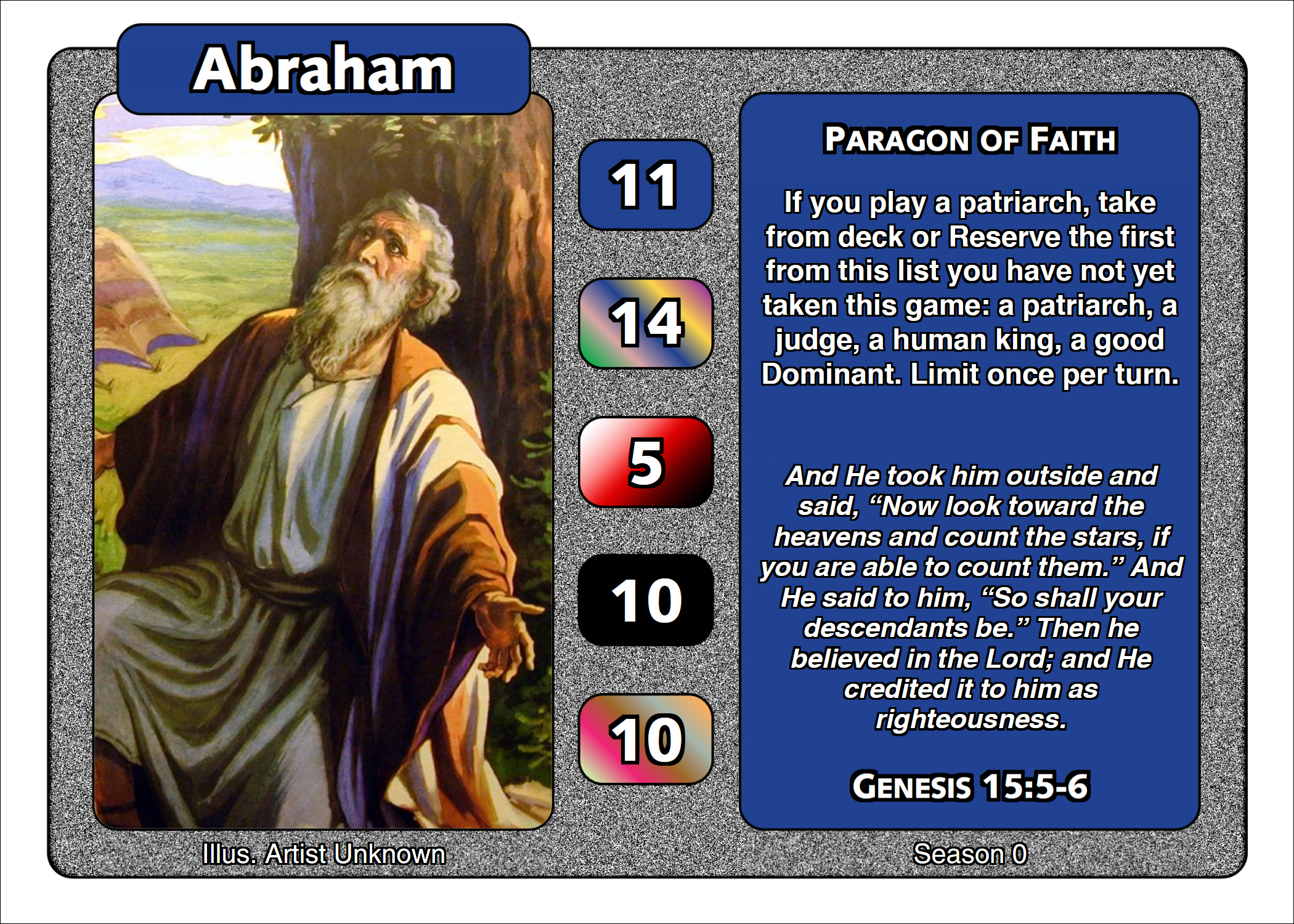
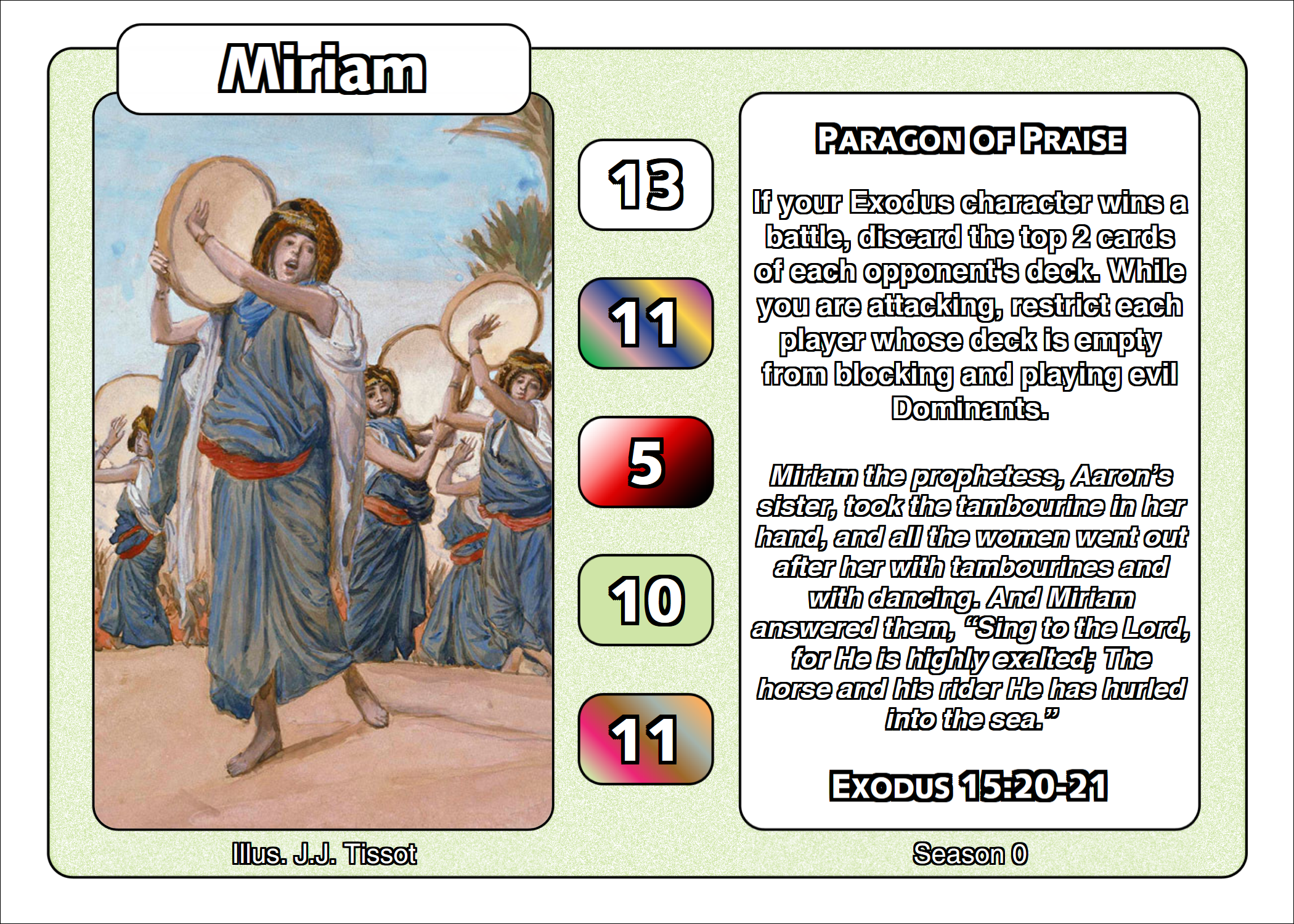
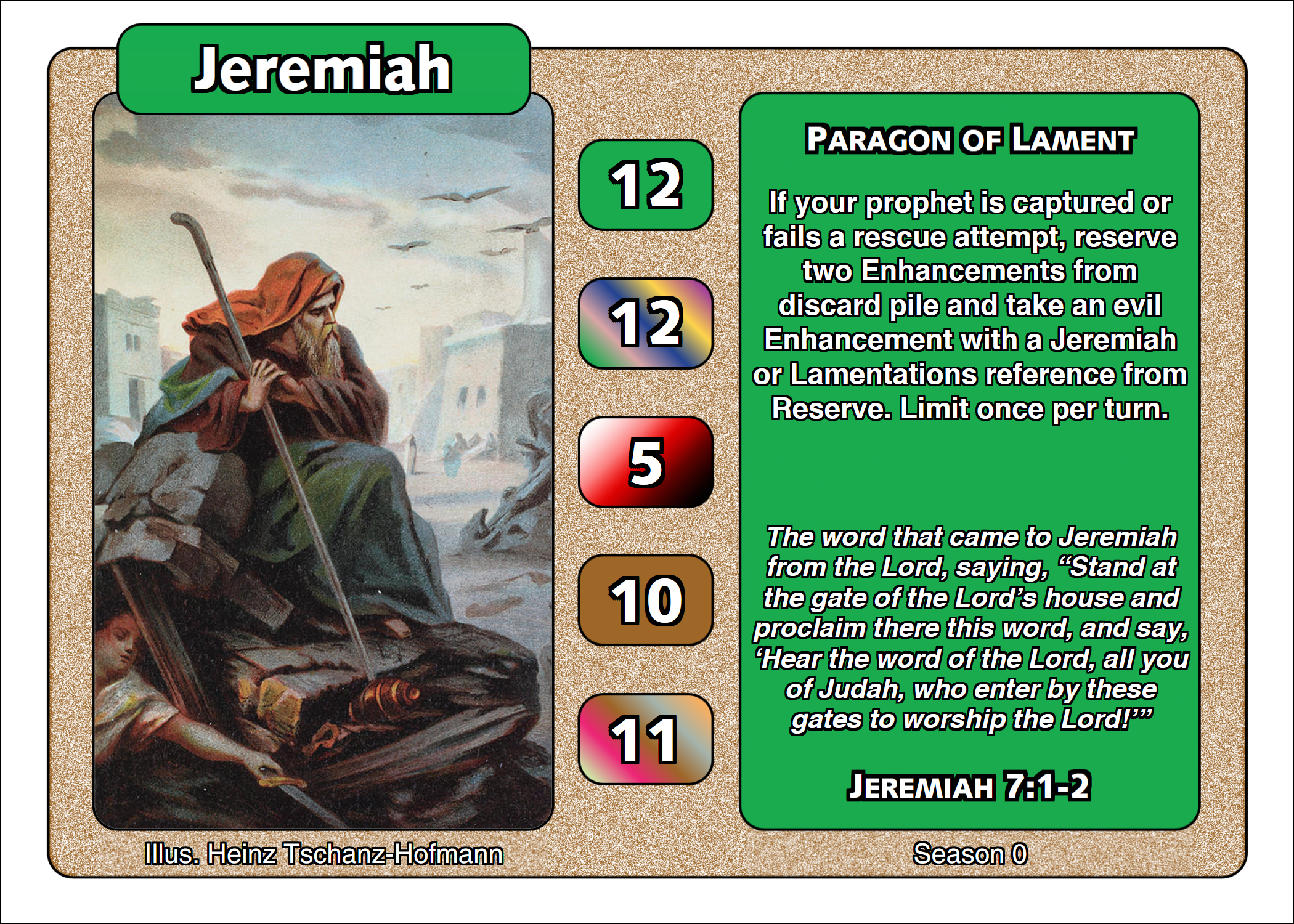
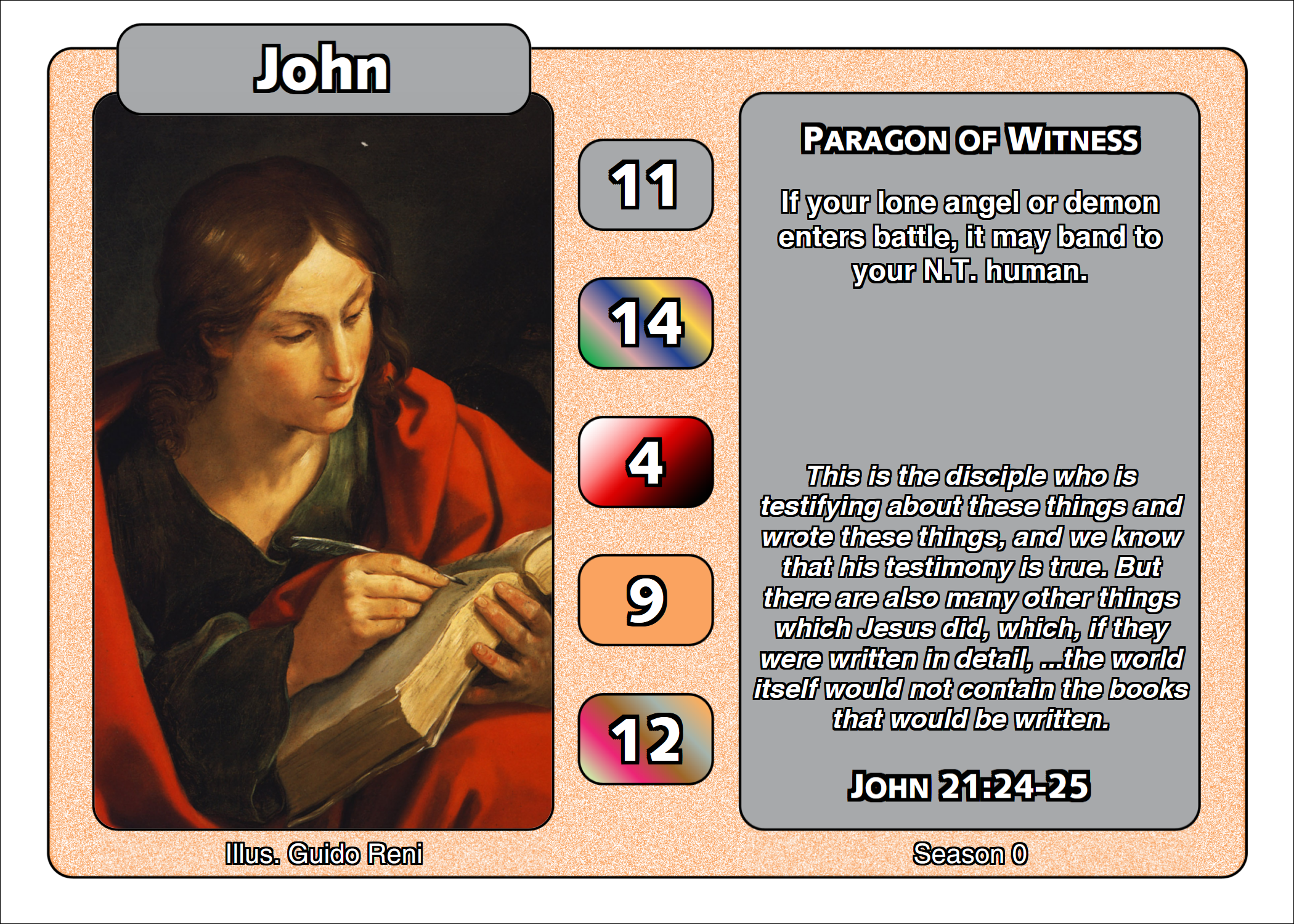
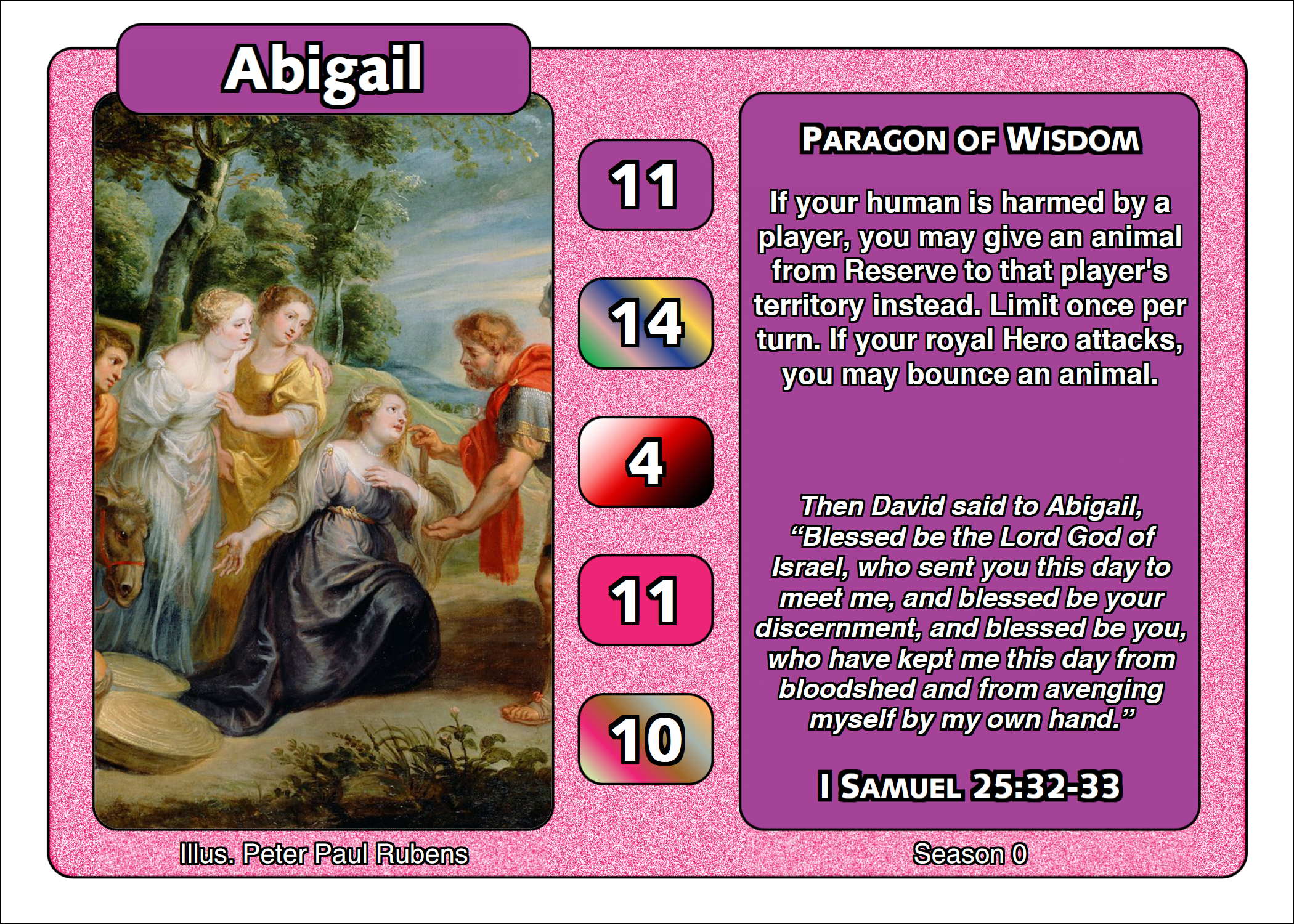
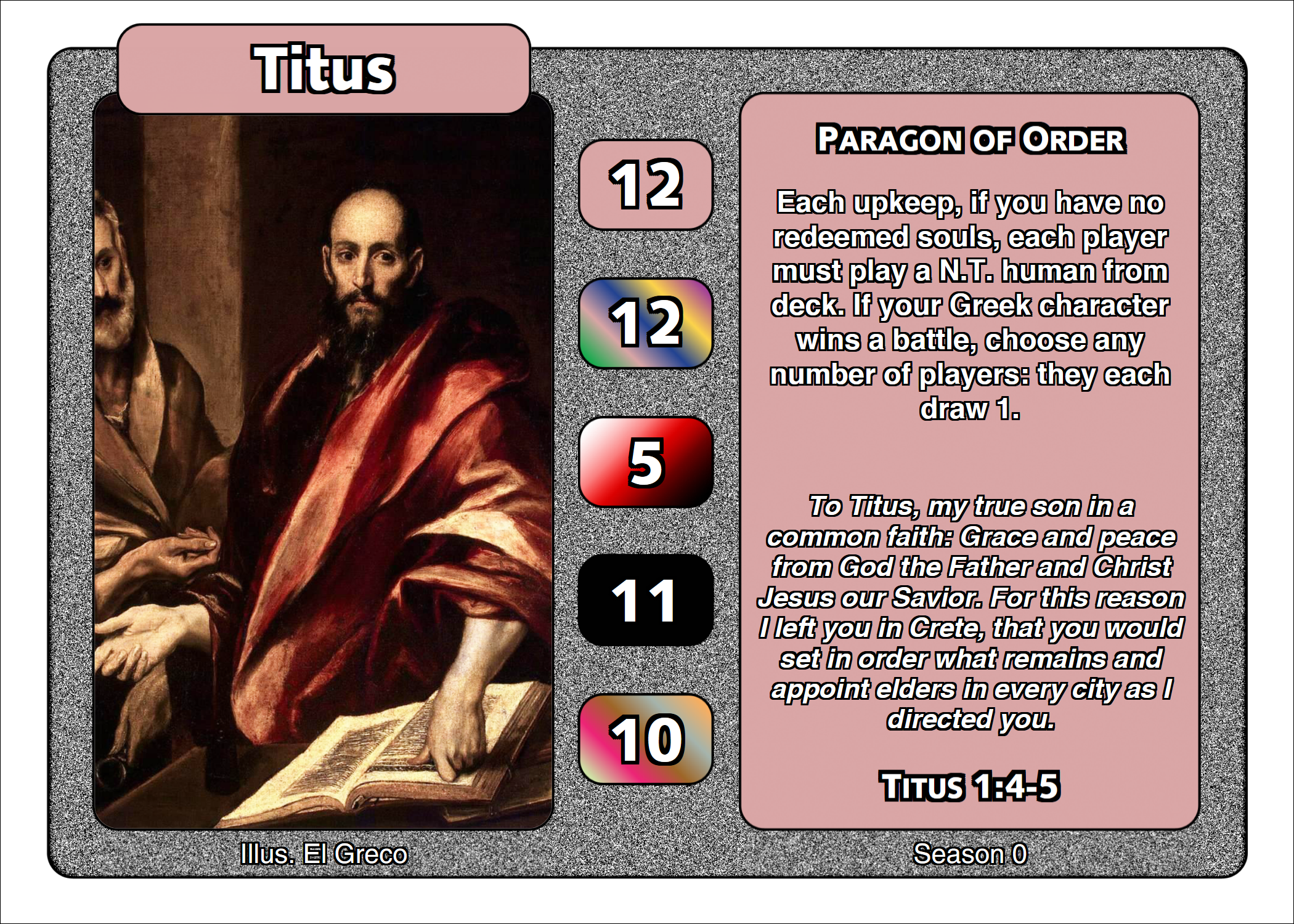
The definition of paragon is "a person or thing regarded as a perfect example of a particular quality." Thus, your deck's Paragon does not represent the Commander of your forces, but rather a righteous individual who inspires all your Characters by his or her particular virtue. Thus, you have Abraham the Paragon of Faith, Esther the Paragon of Courage, Job the Paragon of Patience, Ruth the Paragon of Devotion, Phinehas the Paragon of Zeal, and many more. There are 42 Paragons in all!
Welcome to a New Format
So what makes Paragon different from other games of Redemption?
There are many ways in which the format is unique, but most can be summarized in three main points:
- Your deck is built around a "Paragon" card. Your Paragon determines your primary brigades and provides a unique special ability that is always active. This allows for fresh strategies and some creative deck builds that are different from other formats.
- Lost Souls are very different. There is no soul drought whatsoever! Lost Souls are not included your deck, but rather in a shared Soul Deck. These Lost Souls provide special rewards any time you win a battle (whether attacking or blocking).
- You do not choose which player to attack. You simply push your selected Hero into battle. Beginning with the player on your left, any opponent may choose to block, so you have to be prepared for anything.
Getting Started
You can click here to download the complete rules, both for deck-building and for gameplay.
To play a game of Paragon Redemption, the group will need a Soul Deck to share, and each player will need their own Paragon-legal deck.
Preparing the Soul Deck
The Soul Deck is made up of 21 different Lost Souls designed specifically for the format. Remember, the table only needs one of these decks to share.
Building the Soul Deck takes only three simple steps:
- Sleeve up any 21 Lost Souls in your collection. It does not much matter which ones you select, because only their art will show.
- Print out the page of the format's Lost Souls. I recommend using the full-color version, but there is also a black & white version available if you prefer.
- Cut each out from the page and insert it over one of the sleeved Lost Souls, covering the original text box.
Then you're done! Your playgroup can use this Soul Deck for all of its Paragon games.
Choosing a Paragon
To build your own deck, you must first choose who will be your Paragon. This is an important choice, because it will largely determine your deck's brigades and strategy.
You may choose any one Paragon. They are available in every combination of good brigade and evil brigade.
There is a PDF containing all 42 Paragons. You could print this out, but I recommend only printing whichever Paragons you are actually going to use. You can copy an individual image from the PDF, or you can find it in BaboonyTim's deck-builder.
The Paragon images in the PDF are sized so that they fit in card sleeves. However, as the Paragons are never shuffled into decks, there is no requirement to print them at that size. Feel free to print your Paragon larger if that helps make it more legible. Or, you can simply keep the image of your Paragon open on your phone and not print it out at all.
Building a Paragon-Legal Deck
After you have chosen your Paragon, it is time to build it a deck.
The process may feel quite different than the deck-building you are used to, but once you get the hang of it you will find Paragon deck-building faster and easier than other formats.
As detailed in the rules document, there are several requirements to follow, including a list of legal sets. Not all Rotation sets are legal for Paragon.
BaboonyTim's Card Search and Deck Builder is a huge help for following all the rules. Thank you to Tim for implementing Paragon! The Card Search has a Paragon filter to show you only the legal cards, and the Deck Builder has a Paragon option that will help you make sure all your card quantities are correct.
In a future article, I will provide more detailed tips for deck-building, but the short version is to follow 6 steps while keeping your Paragon's special ability in mind. Let's take Deborah as an example:
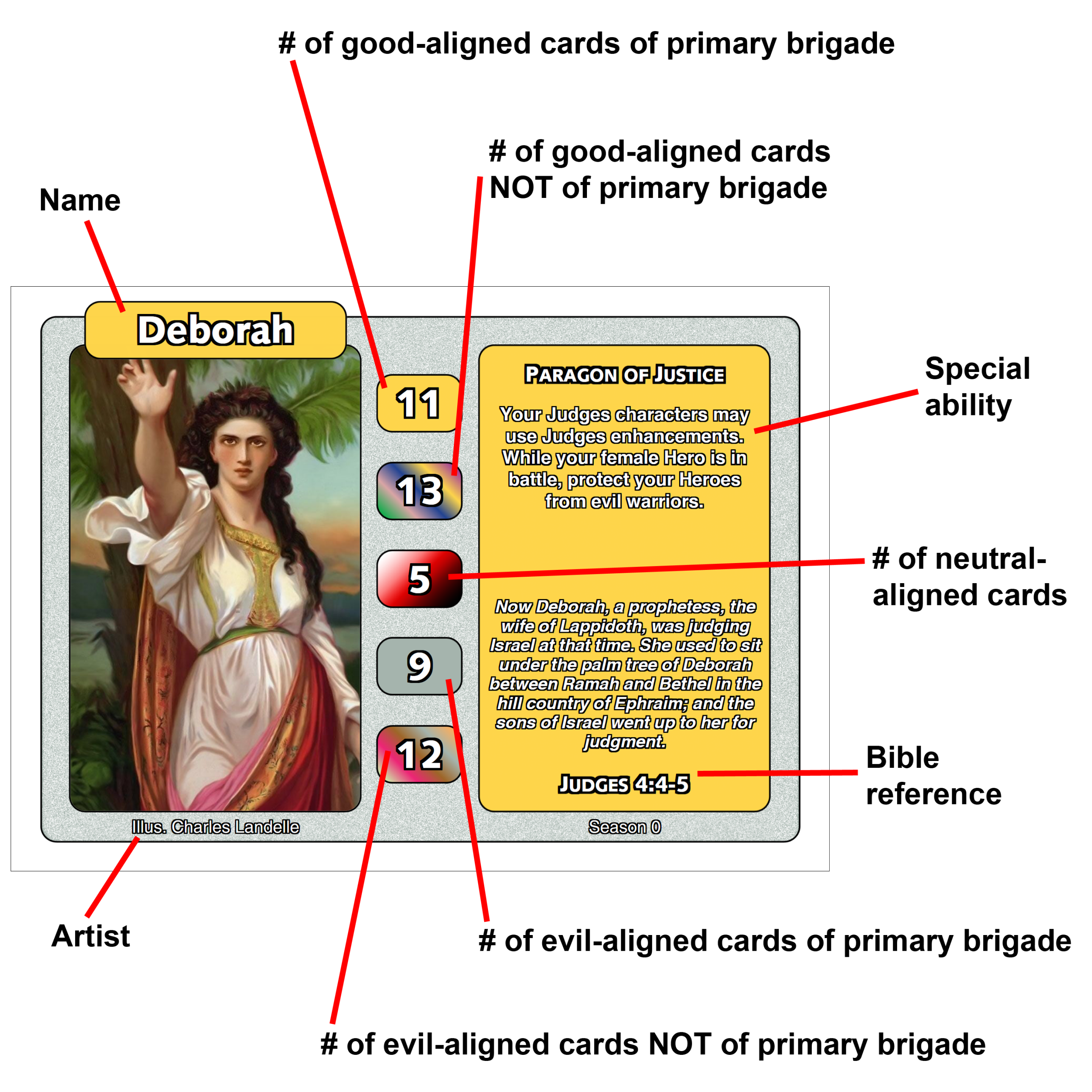
- Choose the cards of your primary good brigade. For Deborah, this means selecting 11 Gold cards.
- Choose the good cards that will support your primary brigade. This includes cards of other brigades, as well as Good Fortresses and notably Good Dominants. Deborah requires 13 such cards in total.
- Choose your neutral cards. This includes not only your Artifacts, but also all of your dual-alignment cards, regardless of brigade. Deborah requires 5.
- Choose the cards of your primary evil brigade. For Deborah, this means selecting 9 Gray cards.
- Choose the evil cards that will support your primary brigade. The total Dominant limit is 7, so depending on how many Good Dominants you included, remember to use the rest of your Dominant slots now. Deborah requires 12 non-Gray evil cards.
- At this point, you have selected all 50 cards that will make up your deck and reserve. The final step is to determine which 10 of the cards will be your Reserve. You can choose any except the Dominants. Note that several of the Lost Soul Rewards provide Reserve search abilities, so it's fine to include card types in your Reserve that your deck does not naturally have many ways to access.
Once you have your Paragon, your 40-card deck, and your 10-card Reserve, you are ready to play!
How Paragon Fixes the Pitfalls of Multiplayer
In my previous article "Ready Player Three", I described the four main problems with traditional multiplayer: the Defense Problem, the Time Problem, the Board-State Problem, and the Kingmaking Problem. The Paragon Format's unique rules are designed to solve all four.
The Defense Problem:
- Each Paragon mandates that a specific number of cards in one's deck must be evil.
- The Lost Soul Rewards provide a significant incentive to block.
- Each player is practically guaranteed first dibs at a block each round (barring choose the blocker shenanigans), so there's no worry about defense being wasted.
- The Soul Deck eliminates the possibility of other players running out of Lost Souls for you to rescue.
The Time Problem:
- Each player almost always has at least one chance to block every round, so the time between one's turns is more engaging.
- Soul drought is completely eliminated, so you do not have the frustration of wasted rounds, and the game keeps moving with the possibility of a rescue every turn.
- The Lost Soul Rewards help speed up the game because most of them draw cards, boost offenses, or weaken defenses.
- Draw phases are faster due to there being no Lost Souls in player decks and no Star Abilities in the format.
The Board-State Problem:
- The list of legal sets excludes all of the ability lengths, card types, and game mechanics that have been retired post-GoC, so the complexity ceiling is much lower.
- Players do not include Lost Souls in their decks, so there are no Lost Souls with global abilities to track.
- Each player's deck size is exactly 40, so there are no oversized decks flooding the board with extra cards.
- Although the Paragons do add abilities to the game, these abilities help give each deck a focused identity that is relatively simple to understand.
The King-Making Problem:
- The Lost Soul Rewards incentivize successful blocks, and the supply of Lost Souls never runs out, so players are unlikely to give away free Lost Souls.
- Even if a player chooses not to block, the next player has an opportunity to block instead.
- Son of God cannot block a rescue attempt (because rescued Souls are immediately replaced), so players cannot use their copies to gang up.
- Lost Soul Rewards often include drawing cards or searching Reserve, so a successful block is less likely to result in running out of resources to block the next player.
Disclaimers
- To be abundantly clear, this format is unofficial. The Paragons and Lost Souls created for it are fan-made for free use, and are not a product of Cactus Game Design.
- I have obviously not been able to test all 42 Paragons thoroughly. Some are bound to be stronger than others, though these differences will be mitigated when playing multiplayer. Feel free to provide feedback; I plan to update them occasionally as the need arises.
- The Paragons were designed with the current Paragon-legal card pool in mind. They are definitely not future-proof. When a new set is released, I will refresh the roster of Paragons with a few new faces and rebalanced abilities.
What Comes Next
Over the next few weeks I plan to share several articles that will help you get acquainted with the format. You can look forward to:
- An introduction to various Paragons
- Tips for deckbuilding
- Sample decklists
- A deep dive into the Soul Deck
If there is a topic in which you are particularly interested, let me know. I am happy to answer your questions or give insight into design choices.
Thanks again to Tim Estes for implementing the Paragon rules into his Card Search and Deck Builder, as well as for his feedback.
And thank you as well, dear reader, for making it all the way to the end of this article. I hope you are excited to experience Redemption in a brand new way!
To buy singles, sealed product, and other gaming supplies mentioned, please visit our sponsors!